Tuesday, May 20, 2008

Improve Your Riding With a Good Book

I like books. Whenever I start a new hobby, I buy books. Bicycling wasn't any different.

When I started mountain biking, it was pretty obvious I had a lot to learn regarding technique. I didn't know how to climb steep hills or maneuver through rock gardens, and the only advice I was given was "ride more." Well, that advice really doesn't work. The following are the books in my collection.


Mountain Bike Magazine's Complete Guide To Mountain Biking Skills was the first cycling book I bought. It was a fun and easy read. I would read a chapter, visualize what I was reading, and then go try it on the trail, with few exceptions. I've attempted a wheelie, but that ended in disaster and I haven't tried since.

I highly recommend this book for beginner mountain bikers and for those that don't got skills. For the men who would like to encourage their girlfriends or wives to ride, this an excellent book to give as a gift. It will take a lot of stress out of learning how to ride because the very important unspoken information is in the book. It really will make climbing and technical riding easier.

I like to think of Bicycling Magazine's Complete Book of Road Cycling Skills as the roadie companion to Mountain Biking Skills. It is set up the same way and has short, easy reading articles. What is great about this book is that it doesn't only have articles pertaining to fit, skills, and racing, but it includes men and women only chapters containing many of those embarrassing to ask questions.

This book is geared toward roadies, but it contains lots of great information for all riders. It serves as a great compliment to the Complete Guide to Mountain Biking Skills.

My riding partner lent me Ned Overend's Mountain Bike Like a Champion. I'm still reading this book. I recommend this book for someone who has been riding for a few months. It is a great read after the Complete Guide to Mountain Biking Skills as it just seems to be written on a more experienced level. Not surprising, and quite enjoyable.

Ned goes more in depth about basic and advanced skills and gives information about racing and training as well. What I found quite enjoyable about this book are Ned's anecdotes and his admissions that he isn't particularly good at everything, at least not in his mind. It's refreshing to learn from such a great rider that it's ok not to be able to master everything. Just do what you can.

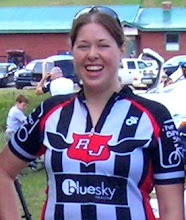
When I joined the Red Jacket – BlueSky Health Racing Team, I decided it was time to get a training book. I didn't get the one that everyone recommended, because it just didn't speak to me at the time. After about an hour sitting on the bookstore floor and thumbing through some cycling books, I purchased The Lance Armstrong Performance Program after much thought.

This book has a lot of great training information including riding programs and goal-specific workouts to include in your training. It is full of Lance experiences and tactics and is quite inspirational. If your training program is lacking something, this may be just the book you need for a little inspiration and a lot of great ideas.

National Bike Month tip of the day: buy a bicycling book for inspiration and skill improvement.

Labels: , , , , ,

Thursday, April 3, 2008

Cycling Forums

The Internet is a pretty addicting little tool. Many of us have spent hours, if not days, surfing the web with endless information at our fingertips. I spent one whole night last week surfing through the backwards chronology of the English monarchy on Wikipedia.

If you are reading this blog, it is probably a safe assumption that you spend some of your bandwidth surfing through various cycling forums as well. I am quite guilty of this, especially this winter. Four complete weeks of bed rest dispersed throughout the winter is encouragement enough to click over to my favorite forum and dream of getting outside to ride my bike. I think this has been the cause of my spring fever, which I rarely get because I usually get to enjoy my winters skiing and snowshoeing in good health.

I spend a lot of my Internet time surfing through four cycling forums. The forum I spend the most time with is the Michigan Mountain Biking Association. This is a fun, passionate group of people who never fail to entertain. Even most serious topics get “sent to the Basement” when someone inevitably makes a sick comment sending the conversation into a downward spiral. This group proves amazing, though, as this forum also serves as a major network for riders who want to find others to ride with at various Michigan trails. One of our members moved to Colorado and even guides many the Michigan riders who head out west to be awed.


Team Estrogen is an online store for women cyclists looking for a large selection of fun cycling clothes and accessories to meet their needs. This store is unique in that it also hosts an online forum for women that has become quite the community. There is an incredible contrast between the female-dominated Team Estrogen and the male-dominated MMBA, both offering different kinds of information with the latter providing more humor and politics.


The Red Jacket – BlueSky Health Cycling Team forum is a new forum that deserves my time mostly because I am the forum administrator and a member of the cycling team. The goal of this forum is to provide a common source for local area riders to communicate and facilitate rides and transportation for races and trips. It is also our goal to provide health and training information as topics of discussion. All are welcome to contribute.


Mountain Bike Review is a precious resource to mountain bikers all over the world. It provides user product reviews, photos, and other resources along with an extensive forum. I only use the forum when I am homebound due its complexities. It is a very large forum with a lot of subforums and countless threads. Due to its size, it can be a bit overwhelming, but a lot of information can be found in its depths.

Labels: , , , , , , ,

Thursday, March 27, 2008

Dressing for Cold Weather Rides

Cyclists like me are anticipating the warmer weather and are already hopping on our bikes for what we like to call training and commuting, but the truth is, we want to play. The minor challenge presented to us is this little thing called the weather. It continues to snow throughout most of my state. One day, the top layer of snow melts in the sunlight on a breezy 40 degree (Fahrenheit) day. The next, there is a wind chill of 9 degrees and there is a fresh four-inch layer of snow covering the ground.

I read a guideline in a forum that I feel is a good rule of thumb: don’t ride if it feels like it is below ten degrees. Personally, I don’t feel like riding if it is that cold. Pay attention to wind chill as that will greatly affect how it will feel outside. It can be 15 degrees but can feel like five with a wind. For the days that are suitable for riding, it is important to find the right clothes. After you’ve done that, your ride will feel just fine. You may even break a sweat.

Luckily for me, I live in an area where Nordic skiing is the norm. I didn’t have to buy additional clothing for winter riding. All I had to do was look at my ski stash.

Everyone has a different idea of what works. I’m willing to bet it’s because we own different things. Therefore, I will share with you what works for me. Since I live in a little peninsula surrounded by Lake Superior, you may find that my opinion is worth noting.

Method Behind the Madness

The first rule of thumb for winter riding is layering. The layers should be slightly loose to allow heat from your body to settle between the layers creating warm air pockets. These pockets are what will keep you warm. Add another layer, create another pocket. If it’s too warm, get rid of a pocket by removing a layer.

The second rule of thumb is the type of material used. Cotton will soak up sweat causing your clothes to become wet creating the perfect environment for hypothermia. Breathable clothing has become quite popular over the last ten years. I’m sure you’ve heard of COOLMAX®, Nike Dri-FIT, Columbia Omni-Dry®, and Patagonia Capilene just to name a few. These fabrics are all designed to wick moisture away from the skin to the surface of the garment to promote evaporation of sweat. This keeps you dry. All of these companies produce quality clothing. It is up to you to find the brand that fits you best. Just make sure the label says breathable.

Check out the plethora of sports equipment web sites out there and you’ll find that these fabrics are used to produce garments that are intended for use as different layers, for example: base layer and shell.

Keep in mind that you get what you pay for. Unless you are buying clearance, which I highly recommend, you’ll find that breathable clothing is usually quite expensive. Now consider this: I’ve been using most of my winter cycling wardrobe for over four years, for different sports, and quite religiously in the winter. With the exception of the reflection material slowly peeling off of my ski tights, everything is holding up well. All the stitching is top notch and there are no holes. The best part is that most of these garments are stretchable for maximum comfort and they will fit you well through quite a weight range . . . just in case you’re planning to lose weight.

The last thing to note about breathable fabrics, and the most important, is care. Breathable fabrics should be washed in cool water without fabric softener and should be hung to dry. Keep in mind that these are polyester fabrics. Plastic can melt in the dryer. Melting clogs the pores of the fabric rendering it useless in the breathable category. Fabric softener also clogs the pores of these fabrics rendering them useless, however, this can remedied simply by rewashing the fabric.

The Layers

Unless you’re a man who needs little support, this first part pertains only to women. The layers are only as good as the base layer. For women, that base layer begins with the sport bra. There is an abundance of sport bras out there waiting for you to buy them. However, not all sports bras are created equal. Aside from finding the one that fits you best, make absolutely sure it is made of a breathable fabric. The other layers can’t wick if the sweat stops at your bra. Underwear could be an issue, but we’re all cyclists. We don’t wear underwear. If you don’t wear a cycling short with a chamois, then you may want to consider buying breathable undies as well.


Clockwise from top: 1 – Nike Dri-FIT cycling jersey; 2 – Columbia Titanium base layer; 3 – Pearl Izumi ski jacket; 4 – Columbia Titanium wind jacket; 5 – Pearl Izumi ski pants; 6 – Nike cycling shorts.

I like to start out with a base layer. I currently use the Columbia Titanium layer shown in the picture above (2), or a blue Patagonia Capilene base layer that I like equally as much. Throwing a cycling jersey (1) over it allows use of the rear pockets while helping to keep the torso warmer. I wear these two layers on most spring rides in temperatures ranging from the upper 40s to the upper 50s. In the 50s and low 60s, I may use a light wind jacket (not pictured) for really breezy days. If it is in the lower 40s and below, I will throw on my Pearl Izumi ski jacket (3) or my Columbia Titanium wind jacket (4) depending on the type of weather. If it’s cold enough, I’ll wear both. It’s better to have too many layers because you can always take them off and throw them in your tool bag or CamelBak.

The legs are much easier to work with. In colder weather, it is very important to keep the knees covered. I wear ski pants (5) over a traditional cycling short (6) through the 50s and in the 60s if there is a cold wind.


This outfit is perfect for mild spring and fall weather that is above 50 degrees. The cycling shorts and ski pants are worn in the wintertime as well.

Accessories are equally as important as all the layers you wear on your body. Without the accessories, your ride could become miserable because your toes are numb or sand from the road is blown up into your eyes.


1 - Trek Interval WSD Sport helmet; 2 – Mountain Hardwear Gore Windstopper Dome; 3 - Kona gloves; 4 – Dakine inserts (came with Dakine Women’s Camino gloves); 5 – Swix Women’s Cross Gloves; 6 – Columbia neck gator; 7 – Optic Nerve sunglasses; 8 – Nike mountain biking shoes; 9 – Planet Bike wool socks; 10 – Wigwam Ingenius ski socks.

In Trek’s helmet owner’s manual, it specifically states that hats should not be worn under the helmet to ensure proper fit. In reality, if you don’t wear a hat during part of the year, your ears will fall off. I use either a headband or a snug-fitting cap like my Mountain Hardwear hat (shown above, 2). You will need to readjust your helmet when fitting it over a hat or headband. Make sure it has a snug fit. I know people who have gone down on the ice and hit their heads. If you experience a fall like this, it will be one of the hardest falls you will encounter as a cyclist, and you will be grateful you were wearing a helmet after the pain the rest of your body experiences. Don’t be afraid to readjust your helmet midway through the ride.

Gloves are an area of debate on some mountain biking forums. I usually wear my ski gloves (5) and they do a great job keeping my hands warm while riding. Recently, I couldn’t find them and chose to wear my Dakine inserts under my mountain biking gloves (4 and 3 respectively). Due to layering, I can see how the second choice can be warmer than the first, but the difference is negligible. If you’re looking for a single pair of gloves for winter riding, Swix makes a perfectly adequate cross country ski glove. I’ve laughingly heard others say, “yeah, but bikers travel faster than skiers.” That may be so, but cross country skiers are also found on the trails in below zero weather wearing those very same gloves.

Riding is not fun when your face is freezing. For skiing and for biking, the odds are good that you will find me wearing my neck gator (6). Sometimes I keep it around my neck, sometimes covering my face, and many times I move it back and forth. It has made what could have been the most unbearable ride into a perfectly enjoyable ride.

One of my bike shop guys says, “Glasses are the second most important piece of safety equipment.” I agree. As a mountain biker, I wear glasses to keep bugs, dirt, and tree branches out of my eyes. Having mud or sand flung up into my eyes and sticking to my contacts isn’t exactly my idea of a good time. I always bring my glasses with me (7). I prefer the clear lenses, but the amber lenses are ideal for sunny days. They’ve offered protection from the wind and the sand on my road rides.

I don’t have the fortune of owning winter specific cycling shoes or neoprene booties to put over them. I wear my regular cycling shoes with packaging tape (8) over the vents to help keep the wind away from my toes. I always wear two pairs of socks for that layering effect – cycling socks or something similar (9) over ski socks (10).

When you step back and look at all the gear you need to keep comfortable during a winter ride, it seems like a lot of stuff. It is. However, all this stuff will make your ride much more comfortable and enjoyable so you, too, can join the rest of us nutcases out there on those cold, slushy roads.

Labels: , , ,

Wednesday, March 26, 2008

The Acne Cure

“How many of you wear makeup while riding?”

I’ve seen this question asked twice on cycling forums. Some of the die-hard feminists scoff at those who do wear makeup while riding. Some have a somewhat valid excuse: they put it on for work.

While people respect my reason for wearing makeup while riding, it is not valid to the die-hards. I have acne. I’ve had horrible acne since I was about fifteen years old. I’ve tried a lot of different things. Just when I thought I had it under control, I found I didn’t really. It probably has something to do with the timing. I probably tried new products just after my favorite time of the month, and the flare-ups would happen just beforehand. I would have a window of about two weeks of peace. In reality, this peace probably had more to do with my hormone levels than the skincare products I was using. Last October, I counted eighteen new blemishes. It was horrifying! I had a mountain range running from the valley of my cheek to the plateau of my chin.


Evidence from my fight with acne lingers on my cheeks. Six months ago, these scars were large, painful blemishes.

I can only imagine how much I’ve spent on facial products. I’ve tried different cleansers, gels, creams, moisturizers, toners, wipes, pore strips, and masks. Averaging about $5 a product, it really adds up. Acne is like obesity, it is a major money-maker for those producing these miracle products.

The only thing I did not try is Proactiv. I have a very good reason for it. One cannot buy it in stores. I won’t do business with a company that won’t allow me the satisfaction of the best part of buying something: shopping therapy. The act of going into the store, grabbing something off of the shelf, purchasing it, and taking it home is a wonderful occurrence for people all over the world, and Proactiv will not allow us that satisfaction with its product. That’s not to say that I don’t occasionally shop online, but I prefer going to the store, especially for medicinal products. My other reason is that it uses the same main ingredient that every other product does. I know people who swear by it, but I’m tired of paying a lot of money for an extra step in my morning routine.

There have been many casualties in my fight against acne. I’ve lost many shirts. Many of the creams will bleach clothing. You won’t notice it right away. It is usually after washing that you’ll notice a white splotch on your shirt where your chin touched your shoulder when you turned your head.

I was fighting asthma and sinus congestion for over two years. I read about doing different detoxes in one of my mother’s books and how they could restore your health and get rid of conditions such as my chronic cough. While perusing through the selection of tea at the local co-op, I came across the Celestial Seasoning’s Detox A.M. Tea. I remembered what I read and decided to try it. What could it hurt?

I had an interesting reaction the first day I drank the tea. As the day progressed, I found myself becoming fatigued and acquiring a headache. The symptoms subsided by the next day when I drank another cup. I had no symptoms the second day. I decided to keep drinking it for a couple weeks to see if it would have any positive affects on me. The result was pleasantly surprising. My face was clearing up!


Celestial Seasoning’s Detox A.M. Tea cleared my skin of painful acne.

The theory behind the tea is how it affects the liver. While the FDA has not approved any health claims to herbal remedies such as this (if you’re like me, the FDA’s word is no good to you, anyway), the detox tea clears toxins out of the overtaxed liver. The theory is that the liver is so busy detoxifying the blood of the toxins we are constantly taking in that it doesn’t have time to properly detoxify itself – it gets overloaded with detoxification. As a result, the skin, another organ that excretes wastes, exhibits this process in the form of acne.

I started using the Detox A.M. in January and saw results within the first two weeks, unlike the over the counter products that require about three months for results. I may get a couple of very small blemishes each month, but it’s nothing like the large, painful and numerous blemishes I was getting beforehand. I enjoy a cup of this tea almost every morning before breakfast. Unlike the creams, the tea tastes good and is part of something I have to do anyway: drink. This is the best skincare regimen I’ve ever had.

I am waiting for the scarring to resolve, and this process takes a while, so I will continue to conceal the scars with makeup. Yes, I wear makeup when I ride, but I hope that this will no longer be necessary in the near future.

Labels: , ,